Decorating a Historic Chapel: Preservation-Safe Ideas for Older Buildings
A chapel built in 1870 has already survived more than a century of candles, weather, and weddings. When you decorate it, the goal is not to leave a mark — it is to leave a memory. That distinction shapes almost every decision: what touches the walls, what sits on the floor, how a wreath is hung, and how everything comes down again. The reassuring part is that preservation-safe decorating rarely looks like a compromise. Done well, it looks more considered than the alternative.
Read the Building Before You Style It
Walk the space with a notebook before you carry in a single vase. Note what you are actually dealing with: lime plaster that crumbles at a fingertip, gilded reredos, encaustic floor tiles, soft old oak, stained glass with lead that flexes, stone that has been quietly absorbing moisture for decades. All of these behave differently from modern drywall and vinyl flooring.
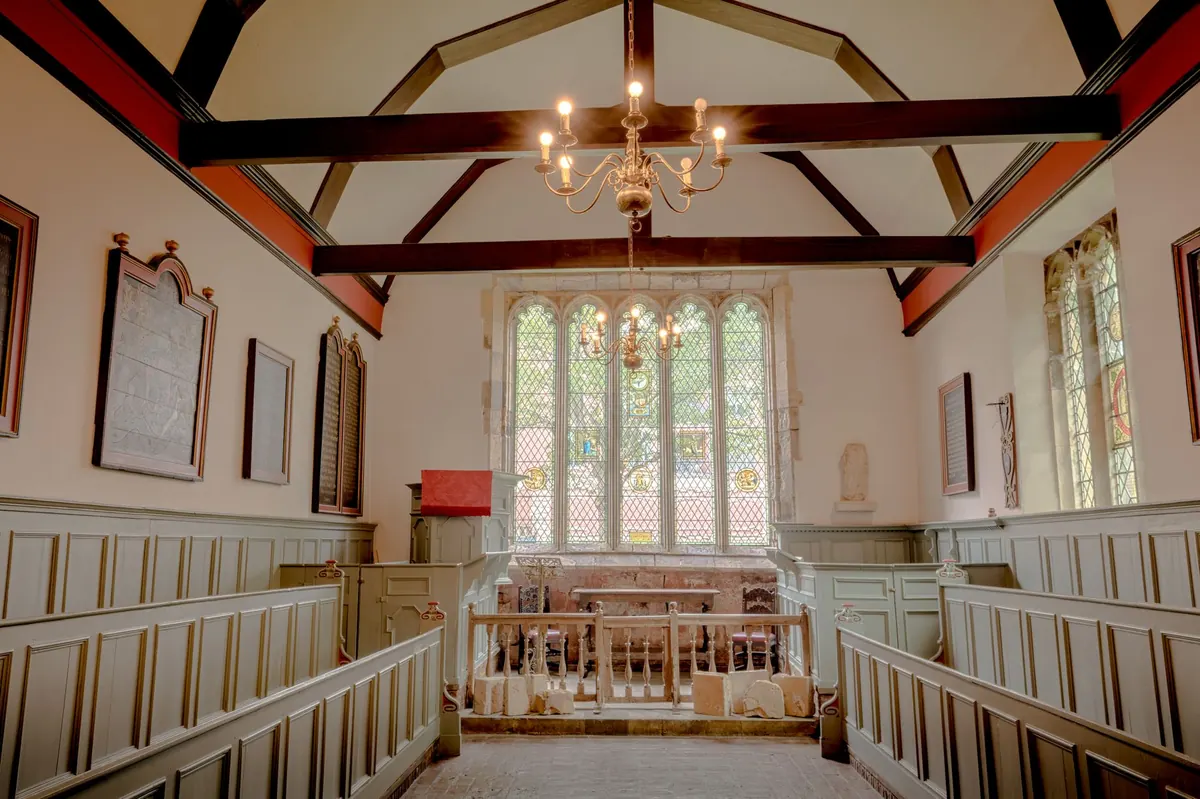
Then look for what previous generations left behind. Older chapels are usually full of useful hardware — iron hooks above the arch, a rail along the choir stalls, tie rods across the nave, brackets beside the pulpit. These existing anchor points are gold. Every decoration you can attach to them is one you do not have to invent a fixing for.
Finally, find out who is responsible for the building. In many places, historic religious buildings carry legal protections, and even undesignated chapels often have a fabric committee, a trustee group, or a denominational advisory body that must approve changes. Ask early, ask in writing, and keep the answer on file.
Let Freestanding Pieces Carry the Design
The single most useful principle in a protected chapel is this: put the weight on the floor, not on the walls. Freestanding design is not a fallback — it can be the whole scheme.
A pair of weighted urns flanking the altar steps, a painted plinth holding a cross, a stepped riser set behind the holy table for flowers, a floor-standing banner frame: none of these require a single hole. Choose finishes that belong in the room. Matte wood, aged brass, chalky paint, and unbleached linen sit comfortably beside oak panelling and limestone. High-gloss acrylic and chrome tend to look like an apology for the architecture.
Check clearances as you arrange. Leave the aisles wide enough for wheelchairs and processions, keep fire exits completely clear, and make sure nothing blocks the sightline from the back pew to the table.
Safe Ways to Hang Without Drilling
Hanging is where most damage happens, usually in the last ten minutes before a service. Work from this order of preference:
- Existing hardware: tie with soft cotton twine or ribbon over a hook or nail that is already there, and pad the contact point with felt.
- Over-and-down lines: pass a line over a tie beam or rail and anchor both ends to weighted bases on the floor, so the beam carries almost no lateral load.
- Door hangers: use over-the-door hooks for wreaths instead of nails, and line the metal with fabric to protect paintwork.
- Freestanding frames: use a weighted A-frame or a tripod for anything that would otherwise hang.
Be sceptical of adhesive hooks. On lime plaster, cold stone, dusty limewash, or flaking paint they often fail, and when they fail they take the surface with them. Avoid staples, screws, and wire twisted around stonework or gilding entirely. And estimate the load — a garland soaked by rain or a damp floral swag weighs far more than it looks, so never guess at what an old hook will hold.
Floors, Water, Wax, and Open Flame
Put felt pads under every piece of furniture you introduce, including the ones you think will never move. Rugs are fine, but choose breathable undersides; rubber-backed mats can trap moisture against stone and leave a ghost of themselves behind.
Never tape anything to a historic floor or stone step. Residue lifts finishes and can pull friable stone. Use loose cable ramps or fabric cord covers instead, and route them where nobody will trip.
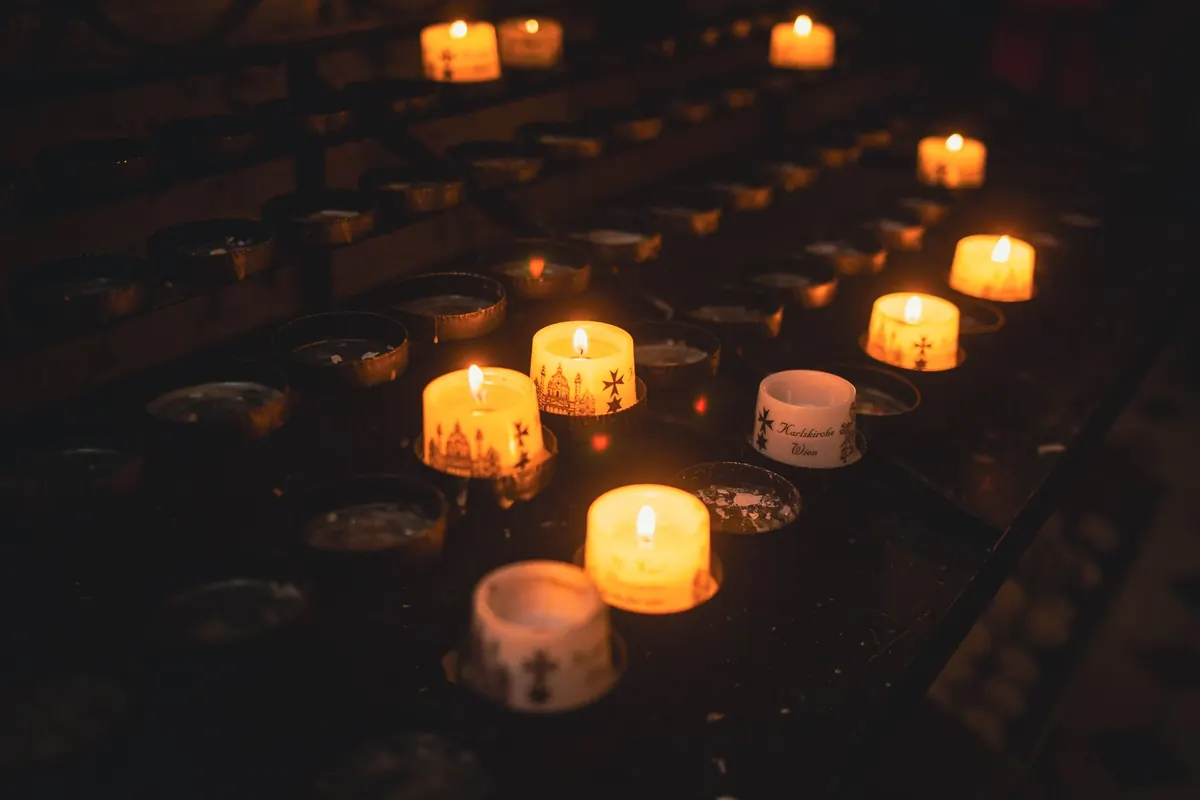
Water is the quiet destroyer. Line every urn and vase with a sealed plastic liner, and set a tray beneath arrangements on wood or stone. For candles, keep open flames well away from dried greenery, textiles, and paper, use glass chimneys where you can, and never leave a lit candle unattended. Check the building's fire policy before you light anything — and if the answer is unclear, battery-operated candles are a perfectly dignified substitute. For anything involving historic fabric, surfaces, or fixed fittings, take advice from a conservator or the relevant building authority before you act.
Dressing the Seasons Without Fixings
Christmas is the test. Garland swagged along an existing rail, wreaths on doors with over-the-door hangers, poinsettias in lined pots standing on the floor, a small tree on a stable weighted base — that is a full scheme with nothing attached to the walls.
At Easter, mass white flowers on the steps and let tall lilies stand freestanding at the chancel entrance. In ordinary time, a few branches, a linen frontal on a freestanding frame, and clean brass will do more than a busy arrangement. Old chapels already contain strong colour and strong texture. Restraint reads as respect.
Document What You Touch, and How You Remove It
Photograph the space before you install anything, and again once it is dressed. Note every contact point — every hook used, every pad placed, every line anchored. On removal, take pieces down in reverse order, check the surfaces underneath, and store hardware labelled so the next person is not starting from scratch. Clean only with methods suited to the surface; a damp cloth that is fine on glass can stain lime plaster.
A Practical First-Install Checklist
- Confirm permissions and any restrictions in writing.
- Photograph and measure the space, including aisle widths and door swings.
- List existing hardware and rate each point roughly by strength.
- Build the scheme floor-up: plinths, urns, risers, frames.
- Add hanging elements only where existing fixings allow.
- Pad every contact point and weigh every load.
- Line all water containers and keep flames clear of fabric.
- Walk the route a visitor will walk, then adjust anything in the way.
- Record what you did, and remove it the same way.
Decorating a historic chapel asks for a light touch and a long memory. Handle it that way, and the building will look better for your work — and unchanged once it is over.
Photo: Michael D Beckwith / Pexels
8 Common Chapel Decorating Mistakes and How to Avoid Them
Eight pew-decorating pitfalls that show up in wedding photos and guest complaints, plus practical fixes...

Easter Chapel Decor: Lilies, White Drapes, and Spring Palettes
Fresh lilies, white drapes, and pastel palettes turn a chapel into a spring sanctuary. Here's how to...
About Us