Evening Chapel Ceremonies: Candles, String Lights, and Dimmer Tips
Daylight does most of the decorating in a chapel. Once it fades, the room becomes something else — softer, closer, more intimate. Evening ceremonies succeed or fail on how that shift is handled. Handled well, wood and stone and stained glass seem to glow from the inside. Handled poorly, you get either a cave holding two candles or a room so evenly bright the altar feels like an airport gate. The answer is layering: candles for close warmth, string lights for structure and sparkle, dimmable fixtures to tie it together.
Read the Room Before You Light It
Visit at the hour the ceremony will actually begin, not at noon. Windows that look decorative by day may face a parking lot with sodium lights that turn the west wall orange at seven. Walk the space and note every source you didn't choose: exit signs, standby LEDs on the sound board, the glow under a hallway door, a ceiling fan light kit, the green dot on the thermostat. Most can be covered, unplugged, or turned away from the room.
Then stand where the couple will stand and photograph the space with the lights off. That picture is your floor — the darkest the room can get. Everything else sits on top of it.
Candle Layers: Height, Grouping, and Distance
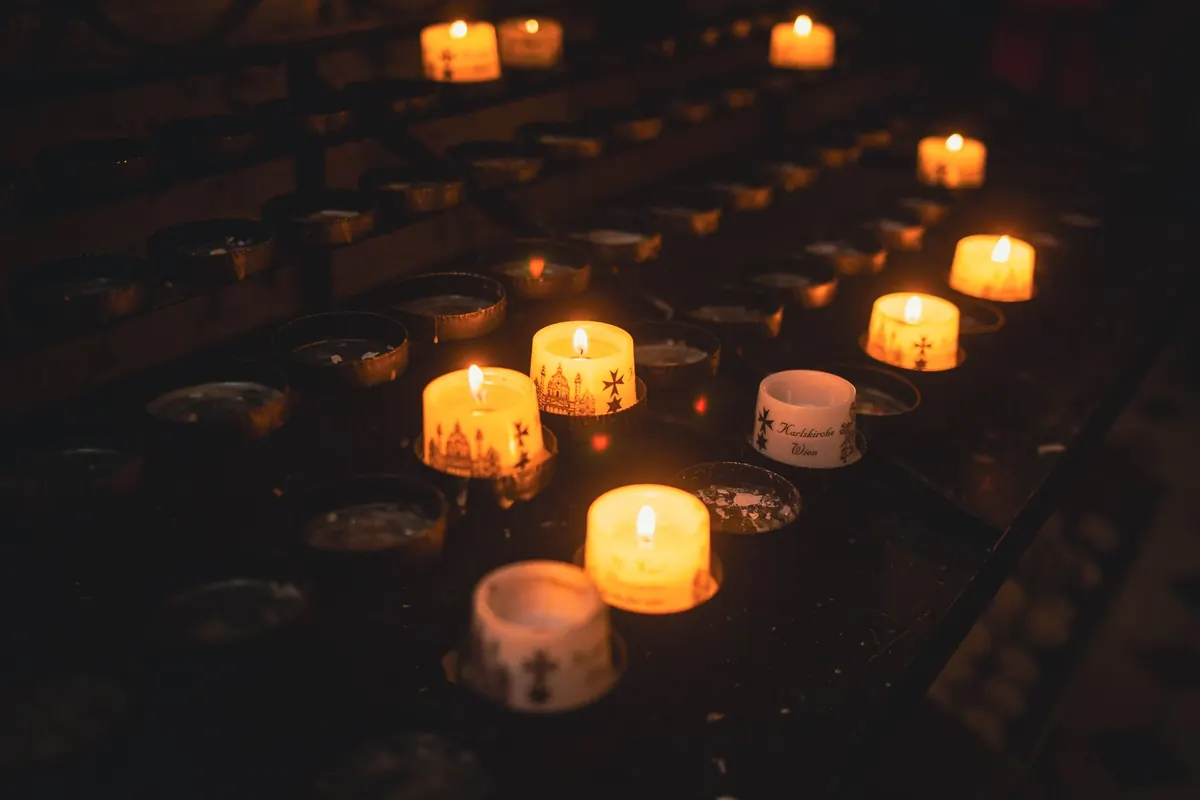
Candles do work no fixture can copy: they create a small warm pool of light exactly where people are looking. Treat them as accents, not as illumination. Three height tiers is enough — low pillars, mid-level tapers, and a few tall pieces behind the grouping. Vary heights within a cluster instead of lining them up, and group in odd numbers of three to five. A dozen candles scattered evenly across a chancel reads as clutter; the same dozen gathered into two or three clusters reads as design.
- Altar and unity table: real wax, unscented, in glass hurricanes or on a non-flammable tray.
- Aisle entry and floor clusters: LED pillars or enclosed flame if guests will pass within a few feet.
- Pew ends: small glass votives, set so sleeves and programs can't brush across them.
- Window ledges and entry table: a single taper or a short row — a good place for battery pillars.
Keep open flame at least a foot from fabric, greenery, paper, and hair, and always on a surface that won't tip. Skip scented candles: mixed fragrances read as a candle shop, and in a closed room they can bother guests with allergies.
String Lights: Structure and Sparkle
String lights give the room its shape. They draw lines — over the aisle, along ceiling beams, down the wall behind the altar, wrapped around columns. Choose warm white, roughly 2200K to 2700K. This matters more than people expect: a cool 4000K set beside warm candles looks blue and thin in the same photograph.
Give the string something to sit against. Lights against dark wood, greenery, or fabric read as depth; lights floating over a pale ceiling just look like string. Keep the lowest point above seven feet so nobody's hair finds it during the processional, match the wire to the background — black on beams, green through foliage — and tape down every cord that crosses a walking path.
One caution: many inexpensive sets aren't dimmable. Check before you promise a fade, and if the set is dimmable, test it at the lowest setting beforehand. Sets that buzz at low output will buzz in front of a hundred guests.
Dimmers: The Control Layer
Dimmers are what make a layered room feel intentional. Without them, evening lighting is simply on or off, and the ceremony has no arc.
- Confirm compatibility. LEDs and dimmers have to be matched. Use the dimmer the lamp manufacturer lists, and test older dimmers with newer lamps before the event. Flicker, buzz, and a narrow dimming range usually mean the two don't belong together.
- Build scenes, not guesses. Arrival at moderate brightness, processional a little lower so faces carry the light, vows and readings at the dimmest point, recessional back up as guests stand. Write the levels down and mark the fader so anyone can repeat them.
- Dim the fixtures before you light the candles. Eyes adapt fast. Candles lit against full house lights look like nothing at all.
- Protect the low end. Find the point where lights flicker or cut out, then stay above it. A steady 15 percent beats a stuttering 5 percent.
- Separate circuits. Aisle, chancel, and house lighting on different controls if you can. Darkening the nave while the altar stays warm is the single most useful trick in evening services.
If you can change only one thing, add a dimmer for the chancel fixtures. That's the difference between a room with candles in it and a room lit by candles.
Evening Weddings: Light That Photographs Well
Candles behind a couple produce a silhouette. If that's the look you want, commit to it — but make sure something else lights their faces: a dimmed fixture on the altar wall, a warm bounce from a side chapel, a low fixture in the nave. Two sources crossing a face always read better than one.
Keep color temperature in a single family. Daylight-white spotlights at 5000K beside candlelight turn skin green on one side and orange on the other, and no editor fully fixes it.
Light the practical things too. Readers need light on the page at the lectern, and a small battery lamp aimed down beats raising the whole room. Tell the photographer which dim
Photo: Eugenia Sol / Pexels
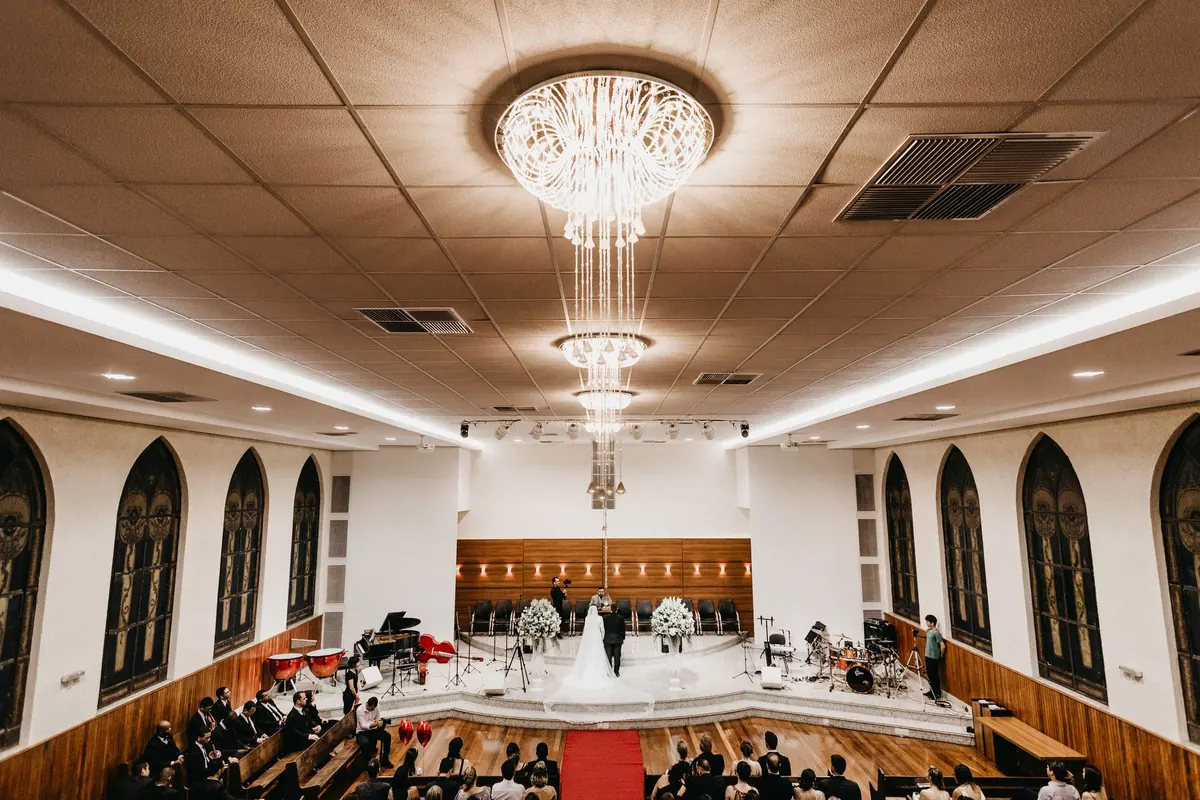
8 Common Chapel Decorating Mistakes and How to Avoid Them
Eight pew-decorating pitfalls that show up in wedding photos and guest complaints, plus practical fixes...
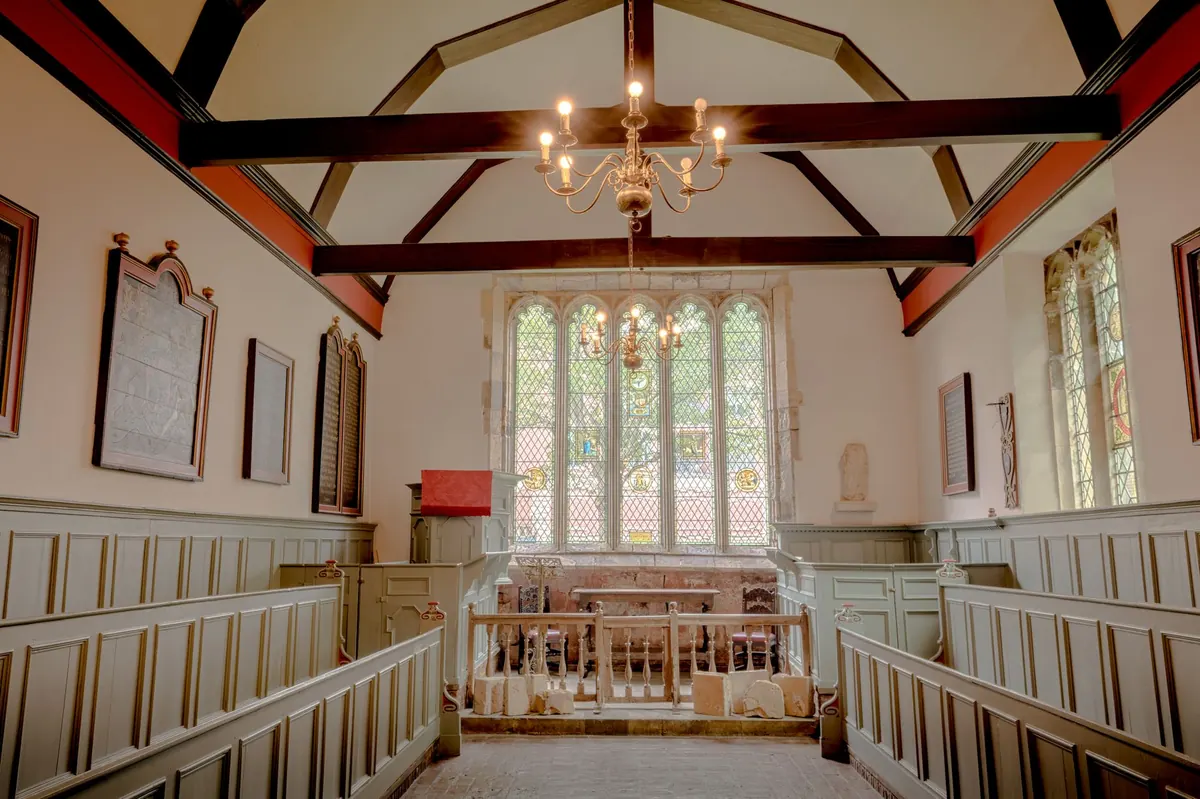
Decorating a Historic Chapel: Preservation-Safe Ideas for Older Buildings
How to decorate historic and protected chapels without harming fragile surfaces — using freestanding...
About Us